RU
EN
АЛТАЙСКИЙ ГОСУДАРСТВЕННЫЙ МЕДИЦИНСКИЙ УНИВЕРСИТЕТ

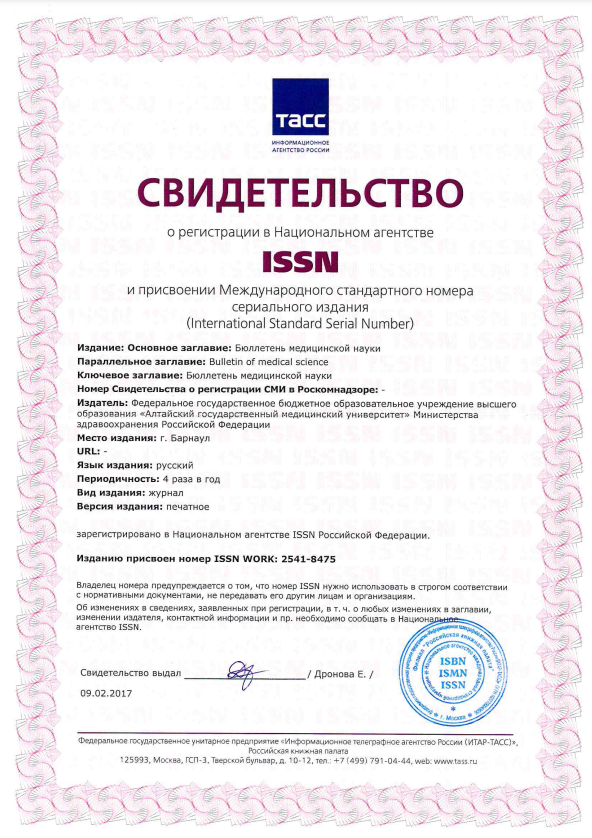
Бюллетень медицинской науки
Женщины репродуктивного возраста испытывают потребность в эффективных и безопасных средствах для профилактики заболеваний молочных желез (в том числе доброкачественной дисплазии молочной железы [ДДМЖ]) и облегчения симптомов предменструального синдрома (ПМС).
Цель. Систематизация данных о фармакологических эффектах и профиле безопасности растительных экстрактов, применяемых для коррекции заболеваний молочных желез, ПМС, гормонального дисбаланса, функциональных нарушений мочеполовой системы.
Материал и методы. Поиск исследований о свойствах экстракта шиповника коричного, экстракта толокнянки обыкновенной, экстракта душицы обыкновенной, экстракта расторопши пятнистой, экстракта ортилии однобокой, экстракта копеечника чайного, экстракта эхинацеи пурпурной и их комбинаций проводился в валидированной библиографической базе национальной медицинской библиотеки США PubMed, в российских научных онлайн-библиотеках eLibrary, Cyberleninka, а также на сайтах ведущих регуляторных ведомств.
Результаты. Растительные экстракты, входящие в состав биологически активных добавок (БАД) к пище, обладают антипролиферативными, противоопухолевыми, антиоксидантными, обезболивающими, противовоспалительными и антисептическими эффектами, показанными в исследованиях in vitro и in vivo. Концентрации арбутина, флавонолов (в пересчете на рутин), флавонолигнанов, гидроксикоричных кислот, дубильных веществ (в пересчете на танин), содержащиеся в суточной дозе БАД к пище, безопасны для человека.
Заключение. Комбинированное применение экстракта шиповника коричного, экстракта толокнянки обыкновенной, экстракта душицы обыкновенной, экстракта расторопши пятнистой, экстракта ортилии однобокой, экстракта копеечника чайного, экстракта эхинацеи пурпурной способно оказать положительный эффект при использовании у женщин с ДДМЖ и ПМС за счет воздействия на звенья патогенеза и симптомы этих состояний, а также может улучшать функциональное состояние мочеполовой системы и гормонального фона. При использовании БАД в соответствии с инструкцией профиль безопасности является благоприятным.
Cary E., Simpson P. Premenstrual disorders and PMDD – a review. Best Pract Res Clin Endocrinol Metab. 2024; 38(1): 101858. https://doi.org/10.1016/j.beem.2023.101858.
Клинические рекомендации: Предменструальный синдром. 2024. URL: . https://cr.minzdrav.gov.ru/preview-cr/797_1 (дата обращения: 12.01.2026).
Родионов В.В., Сметник А.А., Сенча А.Н., Кометова В.В., Бикеев Ю.В., Ашрафян Л.А. Алгоритм диагностики и лечения доброкачественной дисплазии молочной железы. Акушерство и гинекология. 2022; S6: 23–34. – EDN AMXBOH.
Клинические рекомендации: Доброкачественная дисплазия молочной железы. 2024. URL: . https://cr.minzdrav.gov.ru/preview-cr/598_3 (дата обращения: 12.01.2026).
Ayati Z., Ramezani M., Amiri M.S., Sahebkar A., Emami S.A. Genus Rosa: a review of ethnobotany, phytochemistry and traditional aspects according to islamic traditional medicine (ITM). Adv Exp Med Biol. 2021; 1308: 353–401. https://doi.org/10.1007/978-3-030-64872-5_23
Fayaz F., Singh K., Gairola S., Ahmed Z., Shah B.A. A comprehensive review on phytochemistry and pharmacology of Rosa species (Rosaceae). Curr Top Med Chem. 2024; 24(4): 364–378. https://doi.org/10.2174/0115680266274385231023075011
Akanda M.R., Jafrin S., Islam S.A., Hosen S., Islam M.M., Islam N., Shozib H.B. Flavonoids, breast cancer prevention, and its treatment: a growing evidence. Journal of Cancer and Tumor International. 2025; 15(1): 38–59. https://doi.org/10.9734/jcti/2025/v15i1281
Huda R., Sadil S.B.S., Sivaprakasam P., Kumaran S., Pandurangan A.K. Role of terpenoids in breast cancer prevention and therapy. Current Pharmacology Reports. 2024; 10(6): 436–446. https://doi.org/10.1007/s40495-024-00377-9
Жөндербек Ж.А., Колумбаева С.Ж., Ловинская А.В., Воронова Н. Изучение антигенотоксического потенциала настоев шиповника (Rosa Majalis Herrm.) семейства Rosaceae. Reports of the National Academy of sciences of the Republic of Kazakhstan. 2021; 336(2): 54–60. https://doi.org/10.32014/2021.2518-1483.30. [Zhonderbek Zh.A., Kolumbaeva S.Zh., Lovinskaya A.V., Voronova N. Study of the antigenotoxic potential of rosehip infusions (Rosa Majalis Herrm.) of the Rosaceae family. Reports of the National Academy of sciences of the Republic of Kazakhstan. 2021; 336(2): 54–60. https://doi.org/10.32014/2021.2518-1483.30. (In Russ.)].
Peña F., Valencia S., Tereucán G., Nahuelcura J., Jiménez-Aspee F., Cornejo P., Ruiz A. Bioactive Compounds and Antioxidant Activity in the Fruit of Rosehip (Rosa canina L. and Rosa rubiginosa L.). Molecules. 2023; 28(8): 3544. https://doi.org/10.3390/molecules28083544
Krupa A.J., Zybała-Pawłowska M., Kania M., Turek J., Szewczyk B., Grabrucker A.M., Siwek M. Zinc, copper, and magnesium in premenstrual disorders: a narrative review. Pharmacol Rep. 2025; 77(6): 1612–1626. https://doi.org/10.1007/s43440-025-00791-w
Siminiuc R., Ţurcanu D. Impact of nutritional diet therapy on premenstrual syndrome. Front Nutr. 2023; 10: 1079417. https://doi.org/10.3389/fnut.2023.1079417
LiverTox®: Clinical and Research Information on Drug-Induced Liver Injury [Internet]. Bethesda (MD): National Institute of Diabetes and Digestive and Kidney Diseases. Uva Ursi. [Updated 2020 Mar 28]. URL: . https://www.ncbi.nlm.nih.gov/books/NBK556475/ (дата обращения: 12.01.2026).
Gágyor I., Hummers E., Schmiemann G., Friede T., Pfeiffer S., Afshar K., Bleidorn J. Herbal treatment with Uva ursi extract versus fosfomycin in women with uncomplicated urinary tract infection in primary care: a randomized controlled trial. Clin Microbiol Infect. 2021; 27(10): 1441–1447. https://doi.org/10.1016/j.cmi.2021.05.032
Nahar L., Al-Groshi A., Kumar A., Sarker S.D. Arbutin: occurrence in plants, and its potential as an anticancer agent. Molecules. 2022; 27(24): 8786. https://doi.org/10.3390/molecules27248786
Ahmed K.A., Shareef S.H., Faraj T.A., Abdulla M.A, Najmaldin S.K. и соавт. Chemoprotective effect of arbutin on azoxymethane-induced aberrant crypt foci in rat colon via modulation of PCNA/Bax protein. Braz J Med Biol Res. 2024; 57: e13306. https://doi.org/10.1590/1414-431X2024e13306
Hazman Ö., Sarıova A., Bozkurt M.F., Ciğerci İ.H. The anticarcinogen activity of β-arbutin on MCF-7 cells: stimulation of apoptosis through estrogen receptor-α signal pathway, inflammation and genotoxicity. Mol Cell Biochem. 2021; 476(1): 349–360. https://doi.org/10.1007/s11010-020-03911-7
Nurzyńska-Wierdak R., Walasek-Janusz M. Chemical composition, biological activity, and potential uses of oregano (Origanum vulgare L.) and oregano essential oil. Pharmaceuticals (Basel). 2025; 18(2): 267. https://doi.org/10.3390/ph18020267
Di Liberto D., Iacuzzi N., Pratelli G., Porrello A., Maggio A., La Bella S., De Blasio A., Notaro A., D'Anneo A., Emanuele S., Affranchi F., Giuliano M., Lauricella M., Carlisi D. Cytotoxic effect induced by sicilian oregano essential oil in human breast cancer cells. Cells. 2023; 12(23): 2733. https://doi.org/ 10.3390/cells12232733.
Emire Z., Yabalak E. Can Origanum be a hope for cancer treatment? A review on the potential of Origanum species in preventing and treating cancers. Int J Environ Health Res. 2023; 33(9): 894–910. https://doi.org/10.1080/09603123.2022.2064437
Aindelis G., Spyridopoulou K., Kyriakou S., Tiptiri-Kourpeti A., Panayiotidis M.I., Pappa A., Chlichlia K. Evaluating the chemical composition and antitumor activity of Origanum vulgare ssp. hirtum essential oil in a preclinical colon cancer model. Int J Mol Sci. 2025; 26(10): 4737. https://doi.org/10.3390/ijms26104737
Ravi P., Jasuja H., Sarkar D., Katti D.R., Shetty K., Katti K.S. Plant extracts from Origanum vulgare and Vaccinium macrocarpon induce apoptosis of bone metastasized breast cancer cells in a 3D Bone-Mimetic testbed of bone metastasis. Int J Mol Sci. 2026; 27(5): 2355. https://doi.org/10.3390/ijms27052355.
Moghrovyan A., Parseghyan L., Sevoyan G., Darbinyan A., Sahakyan N., Gaboyan M., Karabekian Z., Voskanyan A. Antinociceptive, anti-inflammatory, and cytotoxic properties of Origanum vulgare essential oil, rich with β-caryophyllene and β-caryophyllene oxide. Korean J Pain. 2022; 35(2): 140–151. https://doi.org/10.3344/kjp.2022.35.2.140
Wang X., Zhang Z., Wu S.C. Health benefits of Silybum marianum: phytochemistry, pharmacology, and applications. J Agric Food Chem. 2020; 68(42): 11644–11664. https://doi.org/10.1021/acs.jafc.0c04791
Kim S.H., Choo G.S., Yoo E.S., Woo J.S., Lee J.H. и соавт. Silymarin inhibits proliferation of human breast cancer cells via regulation of the MAPK signaling pathway and induction of apoptosis. Oncol Lett. 2021; 21(6): 492. https://doi.org/10.3892/ol.2021.12753
Randisi F, Modoni G, Riva M, Perletti G, Odorico D, Marras E, Gariboldi MB. Silybum marianum-derived compounds in prostate cancer: mechanisms of action and translational potential. Int J Mol Sci. 2026; 27(10): 4605. https://doi.org/10.3390/ijms27104605.
Nawaz A., Zaib S., Khan I., Ahmed A., Shahzadi K., Riaz H. Silybum marianum: an overview of its phytochemistry and pharmacological activities with emphasis on potential anticancer properties. Anticancer Agents Med Chem. 2023; 23(13): 1519–1534. https://doi.org/10.2174/1871520623666230412111152
Ray P.P., Islam M.A., Islam M.S., Han A., Geng P., Aziz M.A., Mamun A.A. A comprehensive evaluation of the therapeutic potential of silibinin: a ray of hope in cancer treatment. Front Pharmacol. 2024; 15: 1349745. https://doi.org/10.3389/fphar.2024.1349745
Pirouzpanah M.B., Sabzichi M., Pirouzpanah S., Chavoshi H., Samadi N. Silibilin-induces apoptosis in breast cancer cells by modulating p53, p21, Bak and Bcl-XL pathways. Asian Pac J Cancer Prev. 2015; 16(5): 2087–2092. https://doi.org/10.7314/apjcp.2015.16.5.2087
Si L., Liu W., Hayashi T., Ji Y., Fu J., Nie Y., Mizuno K., Hattori S., Onodera S., Ikejima T. Silibinin-induced apoptosis of breast cancer cells involves mitochondrial impairment. Arch Biochem Biophys. 2019; 671: 42–51. https://doi.org/10.1016/j.abb.2019.05.009
Үмбетәлі А.Ө., Нурланова А.А., Устенова Г.О. Применение лекарственного растения ортилии однобокой (Orthilia secunda) в лечении гинекологических заболеваний. Вестник КазНМУ. 2019; 1: 488–489.
Guo L., Qiao J., Huo J., Rupasinghe H.P.V. Plant iridoids: chemistry, dietary sources and potential health benefits. Food Chem X. 2025; 27: 102491. https://doi.org/10.1016/j.fochx.2025.102491
Ndongwe T., Witika B.A., Mncwangi N.P., Poka M.S., Skosana P.P., Demana P.H., Summers B., Siwe-Noundou X. Iridoid derivatives as anticancer agents: an updated review from 1970-2022. Cancers (Basel). 2023; 15(3): 770. https://doi.org/10.3390/cancers15030770
Старостина Н.П., Дурнова Н.А. Перспективы применения растений рода копеечник (hedysarum) в медицине и фармации. Дневник науки. 2021; 4. https://doi.org/10.51691/2541-8327_2021_4_4. – EDN ILGKJW. [Starostina N.P., Durnova N.A. Prospects for the use of plants of the genus Hedysarum in medicine and pharmacy. Science Diary. 2021; 4. https://doi.org/10.51691/2541-8327_2021_4_4. – EDN ILGKJW. (In Russ.)].
Матвиенко У.А., Караваева Л.В., Фролова А.А. Антиоксидантная активность отвара корней копеечника чайного (Hedysarum theinum Krasnob.). Студенческая медицинская наука ХХI века. VI Форум молодежных научных обществ: материалы XXI международной научно-практической конференции студентов и молодых ученых и VI Форума молодежных научных обществ, Витебск, 27–28 октября 2021 года. Витебск: Витебский государственный медицинский университет. 2021; 830–833. – EDN QPNCLY.
Федорова Ю.С., Жалсрай А., Береговых Г.В., Денисова С.В., Третьяк В.М. Изучение антидепрессивного действия астрагала монгольского и копеечника чайного. Синтез наук как основа развития медицинских знаний: Сборник материалов I Межвузовской научно-практической конференции с международным участием, Самара, 18 декабря 2020 года. Под редакцией Н.П. Аввакумовой. Самара: Самарский государственный медицинский университет. 2020; 67–71. – EDN UCWCPP.
Мирошина Т.А., Позняковский В.М., Мирошин Е.В. Эхинацея пурпурная (Echinacea purpurea) как лекарственное растение. Вестник КрасГАУ. 2024; 2: 65–72. https://doi.org/10.36718/1819-4036-2024-2-65-72.
Ahmadi F, Kariman K, Mousavi M, Rengel Z. Echinacea: bioactive compounds and agronomy. Plants (Basel). 2024;13(9):1235. https://doi.org/10.3390/plants13091235. – EDN CRXESO.
Burlou-Nagy C., Bănică F., Jurca T., Vicaș L.G., Marian E., Muresan M.E., Bácskay I., Kiss R., Fehér P., Pallag A. Echinacea purpurea (L.) Moench: biological and pharmacological properties. A review. Plants (Basel). 2022; 11(9): 1244. https://doi.org/10.3390/plants11091244
Tang C., Gong L., Lvzi Xu, Qiu K, Zhang Z, Wan L. Echinacoside inhibits breast cancer cells by suppressing the Wnt/β-catenin signaling pathway. Biochem Biophys Res Commun. 2020 May 21; 526(1): 170–175. https://doi.org/10.1016/j.bbrc.2020.03.050
Semwal R., Joshi S.K., Semwal R.B., Semwal D.K. Health benefits and limitations of rutin – a natural flavonoid with high nutraceutical value. Phytochemistry Letters. 2021; 76: 119–128. https://doi.org/10.1016/j.phytol.2021.10.006
Ciriminna R., Li Petri G., Angellotti G., Fontananova E., Meneguzzo F., Luque R., Pagliaro M. Tannin: an insight into its cosmeceutical properties and uses. Glob Chall. 2025 Apr 27; 9(8): 2500115. https://doi.org/10.1002/gch2.202500115
Sharma K., Kumar V., Kaur J. Tanwar B., Goyal A., Sharma R. et al. Health effects, sources, utilization and safety of tannins: a critical review. Toxin Reviews. 2019. https://doi.org/10.1080/15569543.2019.1662813
Beghriche I., Belhachem A., Hamidene I., Fendri A.H. Origanum vulgare et risque hémorragique, à propos d'un cas [Origanum vulgare and hemorrhagic risk, about a case]. Ann Cardiol Angeiol (Paris). 2025; 74(1): 101856. French. https://doi.org/10.1016/j.ancard.2024.101856

№ 3(2026) Бюллетень медицинской науки